Adobe Pdf Page Size May Not Be Reduced
Following are the things I done to close the case. As I told, the requierement is to make 298MB pdf file to 10MB to upload to a site which allows only 10MB.
Jan 18, 2010. It's possible to print to a new PDF of the correct size, but this operation cannot easily be batched. If I apply the “crop” tool to resize the page in Acrobat, I get this error: Page size may not be reduced. Many report these issues in Adobe's forums. The most common responses suggest reconfiguring the scanner. It seems like a really obvious thing that might just be staring me in the face. When I tried that option Tea, it says 'page size may not be reduced'. Behringer Mx 2804 Manualidades. A non-Pitstop solution I've used is to print out of Acrobat, the document to your target page size using the PDF Printer Driver, or any PS driver that has your.
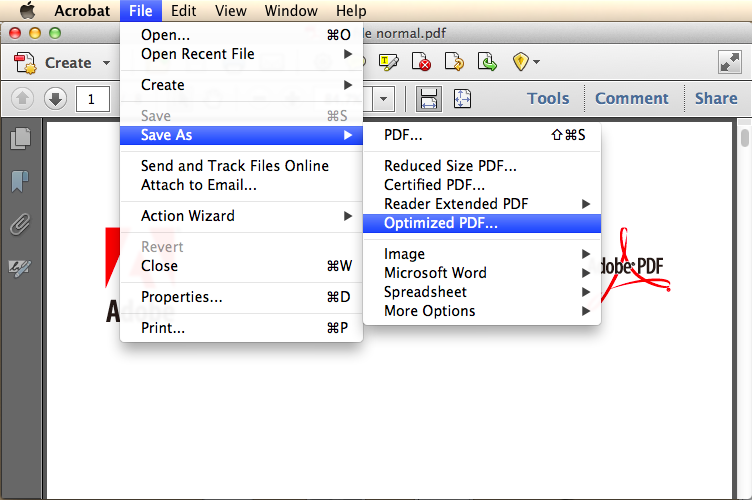
I used Blue Beam Revu software to reduce the file size, it take it down to 36MB with good enough quality. Uploaded to online pdf file compressor (sorry, I don't remember the site), and it make 10MB but low quality (of course, as mentioned by so many IT Pros above). So I shown the final output to user, for which he agreed to upload with not that much good quality, so case closed:) Thanks responses!! Assuming this isn't being printed, then yes, it'll be color images and resolution that are the likely culprit. You can reduce the resolution of the images by doing a file >save as in Adobe Acrobat and optimizing for web usage. It'll bring down the resolution of the images to 72 or 96 dpi, depending on your defaults.
That should bring it down some, assuming, again, that the images aren't already low-res. This will absolutely make it unsuitable for printing at a professional printer.
If you can get your hands on the original files, then take a look at the images. If they are high res, you can save them down to low res. If they have layers, then flatten them. If they are CMYK, change to RGB, assuming that color accuracy isn't necessary. If the images don't need to be in color, change them to grayscale.
If the images are larger than what's being used in the final product, crop them so that only the used portion is actually in the production file. The 'extra' parts of the image are often still a part of the resulting pdf.
Btw, if the images are jpgs, then you won't get much compression on them except by doing one or more of the above things. If any of the images can be changed to vector art, do so. Vector art is much smaller in a pdf than a bitmap image.
You can also try subsetting fonts, but that can sometimes lead to font corruption in the PDF. Magix Music Maker Metal Soundpool Download on this page. Of course, if it needs to be printed, with good color accuracy, at a professional printer, then there's not much you can do. The images on the original file might be 'small' in terms of visual size on the page, but if they were cut/paste into the document they could be huge in resolution and number of pixels. Typically image files already have decent compression, particularly if they're photos using JPG format, so you're not going to get much more compression in an optimized PDF. Make sure your users are generating PDF documents with lower resolution images in the first place so they won't be so big. Also, check the resolution setting when generating the PDF.
If it's set to more than 150-200 ppi and this is a business document, you're using a lot of space for not a lot of gain, and it's going to generate enormous print jobs when printed. As far as resolution/quality is concerned, there you may be fighting physics. Compression is partly efficient use of storage space by using shorthand for the data, but eventually it involves discarding data. The first only gets you so far, and if you have photographic images like JPGs in a PDF, they're not going to compress much at all. In order to get the size down farther, you have to give up quality by using compression techniques that throw away pixels. They try to do it in a way that has the least impact visually, but there is no denying that it will become more muddled and blurry. If you have graphic content, another possibility is grayscale (not B&W).
It may not have the visual impact, but if the message has to be small and can be understood using grayscale graphics, that's going to have a significant impact. Lastly, ask if PDF is the right way to send the info. For example, if this is message to clients/prospects, HTML via email or a webpage may be better suited to transmit a small item and allow the user to load the big stuff later.
Following are the things I done to close the case. As I told, the requierement is to make 298MB pdf file to 10MB to upload to a site which allows only 10MB. I used Blue Beam Revu software to reduce the file size, it take it down to 36MB with good enough quality. Uploaded to online pdf file compressor (sorry, I don't remember the site), and it make 10MB but low quality (of course, as mentioned by so many IT Pros above). So I shown the final output to user, for which he agreed to upload with not that much good quality, so case closed:) Thanks responses!!