Futura Font Family Download Full
By ParaType Download Demos. Designed by Isabella Chaeva and Vladimir Yefimov, Futura PT is a sans serif font family. This typeface has twenty-two styles and was published by ParaType. Available Licenses: Desktop Web Font Ebook Application. What distinguishes the new Intro free font from FontFabric is the strongly expressed geometric makeup and structure. The basic letters of the Alphabet like “A.
Required Arabic ligature The relative complexity of these shaping transformations requires additional data within the font. Sets of font faces with various stylistic variations are often grouped together into font families. In the simplest case a regular face is supplemented with bold and italic faces, but much more extensive groupings are possible. Variations in the thickness of letterform strokes, the weight, and the overall proportions of the letterform, the width, are most common. In the example below, each letter uses a different font face within the Univers font family. The width used increases from top to bottom and the weight increases from left to right.

Weight and width variations within a single font family Creating fonts that support multiple scripts is a difficult task; designers need to understand the cultural traditions surrounding the use of type in different scripts and come up with letterforms that somehow share a common theme. Many languages often share a common script and each of these languages may have noticeable stylistic differences. For example, the Arabic script, when used for Persian and Urdu, exhibits significant and systematic differences in letterforms, as does Cyrillic when used with languages such as Serbian and Russian. The of a font defines the mapping of characters to glyphs for that font. If a document contains characters not supported by the of the fonts contained in a font family list, a user agent may use a procedure to locate an appropriate font that does. If no appropriate font can be found, some form of 'missing glyph' character will be rendered by the user agent.
System fallback can occur when the specified list of font families does not include a font that supports a given character. Although the of a font maps a given character to a glyph for that character, modern font technologies such as OpenType and AAT (Apple Advanced Typography) provide ways of mapping a character to different glyphs based upon feature settings. Fonts in these formats allow these features to be embedded in the font itself and controlled by applications. Common typographic features which can be specified this way include ligatures, swashes, contextual alternates, proportional and tabular figures, and automatic fractions, to list just a few. For a visual overview of OpenType features, see the.
3 Basic Font Properties The particular font face used to render a character is determined by the font family and other font properties that apply to a given element. This structure allows settings to be varied independent of each other. 3.1 Font family: the property Name: font-family Value: [ ] # Initial: depends on user agent Applies to: all elements Inherited: yes Percentages: N/A Media: visual Computed value: as specified Animatable: no This property specifies a prioritized list of font family names or generic family names. A font family defines a set of faces that vary in weight, width or slope. CSS uses the combination of a family name with other style attributes to select an individual face. Using this selection mechanism, rather than selecting a face via the style name as is often done in design applications, allows some degree of regularity in textual display when fallback occurs. Designers should note that the CSS definition of font attributes used for selection are explicitly not intended to define a font taxonomy.
A type designer's idea of a family may often extend to a set of faces that vary along axes other than just the standard axes of weight, width and slope. A family may extend to include both a set of serif faces and a set of sans-serif faces or vary along axes that are unique to that family. The CSS font selection mechanism merely provides a way to determine the “closest” substitute when substitution is necessary.
Unlike other CSS properties, component values are a comma-separated list indicating alternatives. A user agent iterates through the list of family names until it matches an available font that contains a glyph for the character to be rendered. This allows for differences in available fonts across platforms and for differences in the range of characters supported by individual fonts.
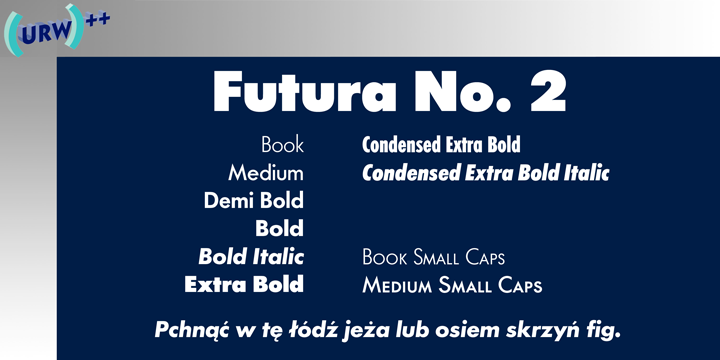
A font family name only specifies a name given to a set of font faces, it does not specify an individual face. For example, given the availability of the fonts below, Futura would match but Futura Medium would not.
Localized family names The details of localized font family name matching and the corresponding issues of case sensitivity are described below in the section. 3.1.1 Generic font families All five generic font families are defined to exist in all CSS implementations (they need not necessarily map to five distinct actual fonts). User agents should provide reasonable default choices for the generic font families, which express the characteristics of each family as well as possible within the limits allowed by the underlying technology. User agents are encouraged to allow users to select alternative choices for the generic fonts. Serif fonts represent the formal text style for a script. This often means but is not limited to glyphs that have finishing strokes, flared or tapering ends, or have actual serifed endings (including slab serifs).
Serif fonts are typically proportionately-spaced. They often display a greater variation between thick and thin strokes than fonts from the ‘’ generic font family. CSS uses the term ‘’ to apply to a font for any script, although other names may be more familiar for particular scripts, such as Mincho (Japanese), Sung, Song or Kai (Chinese), Batang (Korean). For Arabic, the Naskh style would correspond to ‘’ more due to its typographic role rather than its actual design style. Any font that is so described may be used to represent the generic ‘’ family. Sample serif fonts Glyphs in sans-serif fonts, as the term is used in CSS, are generally low contrast (vertical and horizontal stems have the close to the same thickness) and have stroke endings that are plain -- without any flaring, cross stroke, or other ornamentation. Sans-serif fonts are typically proportionately-spaced.
They often have little variation between thick and thin strokes, compared to fonts from the ‘’ family. CSS uses the term ‘’ to apply to a font for any script, although other names may be more familiar for particular scripts, such as Gothic (Japanese), Hei (Chinese), or Gulim (Korean). Any font that is so described may be used to represent the generic ‘’ family. Sample monospace fonts 3.2 Font weight: the property Name: font-weight Value: Initial: normal Applies to: all elements Inherited: yes Percentages: N/A Media: visual Computed value: numeric weight value (see description) Animatable: as The property specifies the weight of glyphs in the font, their degree of blackness or stroke thickness. Values have the following meanings: 100 to 900 These values form an ordered sequence, where each number indicates a weight that is at least as dark as its predecessor. These roughly correspond to the commonly used weight names below: • 100 - Thin • 200 - Extra Light (Ultra Light) • 300 - Light • 400 - Normal • 500 - Medium • 600 - Semi Bold (Demi Bold) • 700 - Bold • 800 - Extra Bold (Ultra Bold) • 900 - Black (Heavy) normal Same as ‘ 400’. Bold Same as ‘ 700’.
Bolder Specifies a bolder weight than the inherited value. Lighter Specifies a lighter weight than the inherited value. Font formats that use a scale other than a nine-step scale should map their scale onto the CSS scale so that 400 roughly corresponds with a face that would be labeled as Regular, Book, Roman and 700 roughly matches a face that would be labeled as Bold. Or weights may be inferred from the style names, ones that correspond roughly with the scale above.
The scale is relative, so a face with a larger weight value must never appear lighter. If style names are used to infer weights, care should be taken to handle variations in style names across locales.
Quite often there are only a few weights available for a particular font family. When a weight is specified for which no face exists, a face with a nearby weight is used. In general, bold weights map to faces with heavier weights and light weights map to faces with lighter weights (see the for a precise definition). The examples here illustrate which face is used for different weights, grey indicates a face for that weight does not exist so a face with a nearby weight is used.
Weight mappings for a font family with 300 and 600 weight faces Although the practice is not well-loved by typographers, bold faces are often synthesized by user agents for faces that lack actual bold faces. For the purposes of style matching, these faces must be treated as if they exist within the family.
Authors can explicitly avoid this behavior by using the ‘’ property. Specified values of ‘’ and ‘’ indicate weights relative to the weight of the parent element. The computed weight is calculated based on the inherited value using the chart below. Inherited value bolder lighter 100 400 100 200 400 100 300 400 100 400 700 100 500 700 100 600 900 400 700 900 400 800 900 700 900 900 700 The table above is equivalent to selecting the next relative bolder or lighter face, given a font family containing normal and bold faces along with a thin and a heavy face.
Authors who desire finer control over the exact weight values used for a given element may use numerical values instead of relative weights. 3.3 Font width: the property Name: font-stretch Value: Initial: normal Applies to: all elements Inherited: yes Percentages: N/A Media: visual Computed value: as specified Animatable: as The property selects a normal, condensed, or expanded face from a font family. Absolute keyword values have the following ordering, from narrowest to widest: • ultra-condensed• extra-condensed• condensed• semi-condensed • normal• semi-expanded• expanded• extra-expanded• ultra-expanded When a face does not exist for a given width, normal or condensed values map to a narrower face, otherwise a wider face. Conversely, expanded values map to a wider face, otherwise a narrower face. The figure below shows how the nine font-stretch property settings affect font selection for font family containing a variety of widths, grey indicates a width for which no face exists and a different width is substituted. Width mappings for a font family with condensed, normal and expanded width faces Animation of font stretch: Font stretch is interpolated in discrete steps.
The interpolation happens as though the ordered values are equally spaced real numbers. The interpolation result is rounded to the nearest value, with values exactly halfway between two values rounded towards the later value in the list above. 3.4 Font style: the property Name: font-style Value: Initial: normal Applies to: all elements Inherited: yes Percentages: N/A Media: visual Computed value: as specified Animatable: no The property allows italic or oblique faces to be selected. Italic forms are generally cursive in nature while oblique faces are typically sloped versions of the regular face. Oblique faces can be simulated by artificially sloping the glyphs of the regular face. Compare the artificially sloped renderings of Palatino ‘ a’ and Baskerville ‘ N’ in grey with the actual italic versions. Artificial sloping versus real italics Values have the following meanings: normal selects a face that is classified as a normal face, one that is neither italic or obliqued italic selects a font that is labeled as an italic face, or an oblique face if one is not oblique selects a font that is labeled as an oblique face, or an italic face if one is not If no italic or oblique face is available, oblique faces can be synthesized by rendering non-obliqued faces with an artificial obliquing operation.
The use of these artificially obliqued faces can be disabled using the ‘’ property. The details of the obliquing operation are not explicitly defined. Authors should also be aware that synthesized approaches may not be suitable for scripts like Cyrillic, where italic forms are very different in shape. It is always better to use an actual italic font rather than rely on a synthetic version. Many scripts lack the tradition of mixing a cursive form within text rendered with a normal face. Chinese, Japanese and Korean fonts almost always lack italic or oblique faces. Fonts that support a mixture of scripts will sometimes omit specific scripts such as Arabic from the set of glyphs supported in the italic face.
User agents should be careful about making assumptions across faces when implementing support for. 3.5 Font size: the property Name: font-size Value: Initial: medium Applies to: all elements Inherited: yes Percentages: refer to parent element's font size Media: visual Computed value: absolute length Animatable: as This property indicates the desired height of glyphs from the font.
For scalable fonts, the font-size is a scale factor applied to the EM unit of the font. (Note that certain glyphs may bleed outside their EM box.) For non-scalable fonts, the font-size is converted into absolute units and matched against the declared font-size of the font, using the same absolute coordinate space for both of the matched values. Values have the following meanings: An keyword refers to an entry in a table of font sizes computed and kept by the user agent. Possible values are: [ xx-small x-small small medium large x-large xx-large ] A keyword is interpreted relative to the table of font sizes and the computed ‘’ of the parent element. Possible values are: [ larger smaller ] For example, if the parent element has a font size of ‘ medium’, a value of ‘ larger’ will make the font size of the current element be ‘ large’.
If the parent element's size is not close to a table entry, the user agent is free to interpolate between table entries or round off to the closest one. The user agent may have to extrapolate table values if the numerical value goes beyond the keywords. A length value specifies an absolute font size (independent of the user agent's font table).
Negative lengths are illegal. A percentage value specifies an absolute font size relative to the parent element's font size. Use of percentage values, or values in ‘ em’s, leads to more robust and cascadable style sheets. The following table provides user agent guidelines for the absolute-size scaling factor and their mapping to HTML heading and absolute font-sizes. The ‘ medium’ value is used as the reference middle value. The user agent may fine-tune these values for different fonts or different types of display devices. CSS absolute-size values xx-small x-small small medium large x-large xx-large scaling factor 3/5 3/4 8/9 1 6/5 3/2 2/1 3/1 HTML headings h6 h5 h4 h3 h2 h1 HTML font sizes 1 2 3 4 5 6 7 Note 1.
To preserve readability, an UA applying these guidelines should nevertheless avoid creating font-size resulting in less than 9 device pixels per EM unit on a computer display. In CSS1, the suggested scaling factor between adjacent indexes was 1.5 which user experience proved to be too large. In CSS2, the suggested scaling factor for computer screen between adjacent indexes was 1.2 which still created issues for the small sizes. The new scaling factor varies between each index to provide a better readability. The actual value of this property may differ from the computed value due a numerical value on ‘’ and the unavailability of certain font sizes. Child elements inherit the computed value (otherwise, the effect of would compound).
Text with and without the use of ‘’ This property allows authors to specify an for an element that will effectively preserve the x-height of the first choice font, whether it is substituted or not. Values have the following meanings: none Do not preserve the font's x-height. Specifies the used in the calculation below to calculate the adjusted font size: c = ( a / a' ) s where: s = font-size value a = as specified by the 'font-size-adjust' property a' = of actual font c = adjusted font-size to use This value applies to any font that is selected but in typical usage it should be based on the of the first font in the font-family list. If this is specified accurately, the (a/a') term in the formula above is effectively 1 for the first font and no adjustment occurs.
If the value is specified inaccurately, text rendered using the first font in the family list will display differently in older user agents that don't support ‘’. The value of ‘’ affects the used value of ‘’ but does not affect the computed value. It affects the size of relative units that are based on font metrics of the such as ex and ch but does not affect the size of em units. Since numeric values of refer to the computed size of ‘’, ‘’ does not affect the used value of. In CSS, authors often specify as a multiple of the ‘’. Since the ‘’ property affects the used value of ‘’, authors should take care setting the line height when ‘’ is used. Setting the line height too tightly can result in overlapping lines of text in this situation.
Authors can calculate the for a given font by comparing spans with the same content but different ‘’ properties. If the same font-size is used, the spans will match when the ‘’ value is accurate for the given font.
Futura with an of 0.5 The box on the right is a bit bigger than the one on the left, so the of this font is something less than 0.5. Adjust the value until the boxes align.
3.7 Shorthand font property: the property Name: font Value: [ [ [ / ]? ] caption icon menu message-box small-caption status-bar Initial: see individual properties Applies to: all elements Inherited: yes Percentages: see individual properties Media: visual Computed value: see individual properties Animatable: see individual properties The ‘’ property is, except as described below, a shorthand property for setting,,,, ‘’,, at the same place in the stylesheet. Values for the property may also be included but only those supported in CSS 2.1, none of the values added in this specification can be used in the ‘’ shorthand: = [normal small-caps] The syntax of this property is based on a traditional typographical shorthand notation to set multiple properties related to fonts. All subproperties of the ‘’ property are first reset to their initial values, including those listed above plus ‘’, ‘’, subproperties of and and ‘’.
Then, those properties that are given explicit values in the ‘’ shorthand are set to those values. For a definition of allowed and initial values, see the previously defined properties. For reasons of backwards compatibility, it is not possible to set ‘’ to anything other than its initial value using the ‘’ shorthand property; instead, use the individual property.
For the examples given below, assume that a document is located at and all URL's link to valid font resources supported by the user agent. Fonts defined with the ‘’ descriptor values below will be loaded: /* same origin (i.e. Domain, scheme, port match document) */ src: url(fonts/simple.woff); /* data url's with no redirects are treated as same origin */ src: url('data:application/font-woff;base64.' ); /* cross origin, different domain */ /* Access-Control-Allow-Origin response header set to '*' */ src: url(Fonts defined with the ‘’ descriptor values below will fail to load: /* cross origin, different scheme */ /* no Access-Control-xxx headers in response */ src: url(/* cross origin, different domain */ /* no Access-Control-xxx headers in response */ src: url(5 Font Matching Algorithm The algorithm below describes how fonts are associated with individual runs of text. For each character in the run a font family is chosen and a particular font face is selected containing a glyph for that character.
5.1 Case sensitivity of font family names As part of the font matching algorithm outlined below, user agents must match font family names used in style rules with actual font family names contained in fonts available in a given environment or with font family names defined in rules. User agents must match these names case insensitively, using the 'Default Caseless Matching' algorithm outlined in the Unicode specification. This algorithm is detailed in section 3.13 entitled 'Default Case Algorithms'.
Specifically, the algorithm must be applied without normalizing the strings involved and without applying any language-specific tailorings. The case folding method specified by this algorithm uses the case mappings with status field ‘ C’ or ‘ F’ in the CaseFolding.txt file of the Unicode Character Database. For authors this means that font family names are matched case insensitively, whether those names exist in a platform font or in the rules contained in a stylesheet.
Authors should take care to ensure that names use a character sequence consistent with the actual font family name, particularly when using combining characters such as diacritical marks. For example, a family name that contains an uppercase A (U+0041) followed by a combining ring (U+030A) will not match a name that looks identical but which uses the precomposed lowercase a-ring character (U+00E5) instead of the combining sequence. Implementors should take care to verify that a given caseless string comparison implementation uses this precise algorithm and not assume that a given platform string matching routine follows it, as many of these have locale-specific behavior or use some level of string normalization. 5.2 Matching font styles The procedure for choosing a font for a given character in a run of text consists of iterating over the font families named by the property, selecting a font face with the appropriate style based on other font properties and then determining whether a glyph exists for the given character. This is done using the character map of the font, data which maps characters to the default glyph for that character. A font is considered to support a given character if (1) the character is contained in the font's and (2) if required by the containing script, shaping information is available for that character.
Some legacy fonts may include a given character in the but lack the shaping information (e.g. Or ) necessary for correctly rendering text runs containing that character.
Codepoint sequences consisting of a base character followed by a sequence of combining characters are treated slightly differently, see the section on below. For this procedure, the default face for a given font family is defined to be the face that would be selected if all font style properties were set to their initial value. • Using the computed font property values for a given element, the user agent starts with the first family name specified by the property. • If the family name is a generic family keyword, the user agent looks up the appropriate font family name to be used. User agents may choose the generic font family to use based on the language of the containing element or the Unicode range of the character. • For other family names, the user agent attempts to find the family name among fonts defined via rules and then among available system fonts, matching names with a as outlined in the section above.
On systems containing fonts with multiple localized font family names, user agents must match any of these names independent of the underlying system locale or platform API used. If the font resources defined for a given face in an rule are either not available or contain invalid font data, then the face should be treated as not present in the family. If no faces are present for a family defined via rules, the family should be treated as missing; matching a platform font with the same name must not occur in this case. • If a font family match occurs, the user agent assembles the set of font faces in that family and then narrows the set to a single face using other font properties in the order given below. A group of faces defined via rules with identical font descriptor values but differing ‘’ values are considered to be a single composite face for this step: • is tried first. Banana Yoshimoto Sonno Profondo Pdf Converter. If the matching set contains faces with width values matching the value, faces with other width values are removed from the matching set.
If there is no face that exactly matches the width value the nearest width is used instead. If the value of is or one of the condensed values, narrower width values are checked first, then wider values. If the value of is one of the expanded values, wider values are checked first, followed by narrower values. Once the closest matching width has been determined by this process, faces with other widths are removed from the matching set. • is tried next.
If the value of is ‘’, italic faces are checked first, then oblique, then normal faces. If the value is ‘’, oblique faces are checked first, then italic faces and then normal faces. If the value is, normal faces are checked first, then oblique faces, then italic faces. Faces with other style values are excluded from the matching set.
User agents are permitted to distinguish between italic and oblique faces within platform font families but this is not required, so all italic or oblique faces may be treated as italic faces. However, within font families defined via rules, italic and oblique faces must be distinguished using the value of the descriptor. For families that lack any italic or oblique faces, users agents may create artificial oblique faces, if this is permitted by the value of the ‘’ property. • is matched next, so it will always reduce the matching set to a single font face.
If bolder/lighter relative weights are used, the effective weight is calculated based on the inherited weight value, as described in the definition of the property. Given the desired weight and the weights of faces in the matching set after the steps above, if the desired weight is available that face matches. Otherwise, a weight is chosen using the rules below: • If the desired weight is less than 400, weights below the desired weight are checked in descending order followed by weights above the desired weight in ascending order until a match is found. • If the desired weight is greater than 500, weights above the desired weight are checked in ascending order followed by weights below the desired weight in descending order until a match is found. • If the desired weight is 400, 500 is checked first and then the rule for desired weights less than 400 is used. • If the desired weight is 500, 400 is checked first and then the rule for desired weights less than 400 is used. • ‘’ must be matched within a UA-dependent margin of tolerance.
(Typically, sizes for scalable fonts are rounded to the nearest whole pixel, while the tolerance for bitmapped fonts could be as large as 20%.) Further computations, e.g., by ‘ em’ values in other properties, are based on the ‘’ value that is used, not the one that is specified. • If the matched face is defined via rules, user agents must use the procedure below to select a single font: • If the font resource has not been loaded and the range of characters defined by the ‘’ descriptor value includes the character in question, load the font. • After downloading, if the supports the character in question, select that font. When the matched face is a, user agents must use the procedure above on each of the faces in the in reverse order of rule definition. While the download occurs, user agents may either wait until the font is downloaded or render once with substituted font metrics and render again once the font is downloaded.• If no matching face exists or the matched face does not contain a glyph for the character to be rendered, the next family name is selected and the previous three steps repeated. Glyphs from other faces in the family are not considered.
The only exception is that user agents may optionally substitute a synthetically obliqued version of the if that face supports a given glyph and synthesis of these faces is permitted by the value of the ‘’ property. For example, a synthetic italic version of the regular face may be used if the italic face doesn't support glyphs for Arabic.• If there are no more font families to be evaluated and no matching face has been found, then the user agent performs a system font fallback procedure to find the best match for the character to be rendered. The result of this procedure may vary across user agents. • If a particular character cannot be displayed using any font, the user agent should indicate by some means that a character is not being displayed, displaying either a symbolic representation of the missing glyph (e.g. Using a ) or using the missing character glyph from a default font.
Optimizations of this process are allowed provided that an implementation behaves as if the algorithm had been followed exactly. Matching occurs in a well-defined order to ensure that the results are as consistent as possible across user agents, given an identical set of available fonts and rendering technology.
The first available font, used in the definition of such as ‘ ex’ and ‘ ch’, is defined to be the first available font that would match any character given font families in the ‘ font-family’ list (or a user agent's default font if none are available). 5.3 Cluster matching When text contains characters such as combining marks, ideally the base character should be rendered using the same font as the mark, this assures proper placement of the mark. For this reason, the font matching algorithm for clusters is more specialized than the general case of matching a single character by itself. For sequences containing variation selectors, which indicate the precise glyph to be used for a given character, user agents always attempt to find the appropriate glyph before using the default glyph of the base character. A sequence of codepoints containing combining mark or other modifiers is termed a grapheme cluster (see for a more complete description). For a given cluster containing a base character, b and a sequence of combining characters c1, c2, the entire cluster is matched using these steps: • For each family in the font list, a face is chosen using the style selection rules defined in the previous section. • If all characters in the sequence b + c1 + c2 are completely supported by the font, select this font for the sequence.
• If a sequence of multiple codepoints is canonically equivalent to a single character and the font that character, select this font for the sequence and use the glyph associated with the canonically equiavlent character for the entire cluster. • If no font was found in the font list in step 1: • If c1 is a variation selector, system fallback must be used to find a font that the full sequence of b + c1. If no font on the system the full sequence, match the single character b using the normal procedure for matching single characters and ignore the variation selector. Note: a sequence with more than one variation selector must be treated as an encoding error and the trailing selectors must be ignored. • Otherwise, the user agent may optionally use system font fallback to match a font that the entire cluster. • If no font is found in step 2, use the matching sequence from step 1 to determine the longest sequence that is completely by a font in the font list and attempt to match the remaining combining characters separately using the rules for single characters.
5.4 Character handling issues CSS font matching is always performed on text runs containing Unicode characters, so documents using legacy encodings are assumed to have been transcoded before matching fonts. For fonts containing for both legacy encodings and Unicode, the contents of the legacy encoding must have no effect on the results of the font matching process.
The font matching process does not assume that text runs are in either normalized or denormalized form (see for more details). Fonts may only support precomposed forms and not the decomposed sequence of base character plus combining marks. Authors should always tailor their choice of fonts to their content, including whether that content contains normalized or denormalized character streams. If a given character is a Private-Use Area Unicode codepoint, user agents must only match font families named in the ‘ font-family’ list that are not generic families.
If none of the families named in the ‘ font-family’ list contain a glyph for that codepoint, user agents must display some form of missing glyph symbol for that character rather than attempting for that codepoint. When matching the replacement character U+FFFD, user agents may skip the font matching process and immediately display some form of missing glyph symbol, they are not required to display the glyph from the font that would be selected by the font matching process. In general, the fonts for a given family will all have the same or similar. The process outlined here is designed to handle even font families containing faces with widely variant. However, authors are cautioned that the use of such families can lead to unexpected results.
5.5 Font matching changes since CSS 2.1 The algorithm above is different from CSS 2.1 in a number of key places. These changes were made to better reflect actual font matching behavior across user agent implementations. Differences compared to the font matching algorithm in CSS 2.1: • The algorithm includes font-stretch matching.
• All possible font-style matching scenarios are delineated. • Small-caps fonts are not matched as part of the font matching process, they are now handled via font features.
• Unicode variation selector matching is required. • Cluster sequences are matched as a unit. 5.6 Font matching examples. If the content language of the element is known according to the rules of the, user agents are required to infer the OpenType language system from the content language and use that when selecting and positioning glyphs using an OpenType font. For OpenType fonts, in some cases it may be necessary to explicitly declare the OpenType language to be used, for example when displaying text in a given language that uses the typographic conventions of another language or when the font does not explicitly support a given language but supports a language that shares common typographic conventions. The ‘’ property is used for this purpose.
6.3 Kerning: the property Name: font-kerning Value: Initial: auto Applies to: all elements Inherited: yes Percentages: N/A Media: visual Computed value: as specified Animatable: no Kerning is the contextual adjustment of inter-glyph spacing. This property controls metric kerning, kerning that utilizes adjustment data contained in the font. Auto Specifies that kerning is applied at the discretion of the user agent normal Specifies that kerning is applied none Specifies that kerning is not applied For fonts that do not include kerning data this property will have no visible effect. When rendering with OpenType fonts, the specification suggests that kerning be enabled by default. When kerning is enabled, the OpenType kern feature is enabled (for vertical text runs the vkrn feature is enabled instead).
User agents must also support fonts that only support kerning via data contained in a kern font table, as detailed in the OpenType specification. If the ‘ letter-spacing’ property is defined, kerning adjustments are considered part of the default spacing and letter spacing adjustments are made after kerning has been applied. When set to ‘ auto’, user agents can determine whether to apply kerning or not based on a number of factors: text size, script, or other factors that influence text processing speed. Authors who want proper kerning should use to explicitly enable kerning.
Likewise, some authors may prefer to disable kerning in situations where performance is more important than precise appearance. However, in well-designed modern implementations the use of kerning generally does not have a large impact on text rendering speed. 6.4 Ligatures: the property Name: font-variant-ligatures Value: [ ] Initial: normal Applies to: all elements Inherited: yes Percentages: N/A Media: visual Computed value: as specified Animatable: no Ligatures and contextual forms are ways of combining glyphs to produce more harmonized forms. = [ ] = [ ] = [ ] = [ ] Individual values have the following meanings: normal A value of specifies that common default features are enabled,. For OpenType fonts, common ligatures and contextual forms are on by default, discretionary and historical ligatures are not. None Specifies that all types of ligatures and contextual forms covered by this property are explicitly disabled. In situations where ligatures are not considered necessary, this may improve the speed of text rendering.
Common-ligatures Enables display of common ligatures (OpenType features: liga, clig). For OpenType fonts, common ligatures are enabled by default. No-contextual Disables display of contextual alternates (OpenType feature: calt).
Required ligatures, needed for correctly rendering complex scripts, are not affected by the settings above, including ‘ none’ (OpenType feature: rlig). 6.5 Subscript and superscript forms: the property Name: font-variant-position Value: Initial: normal Applies to: all elements Inherited: yes Percentages: N/A Media: visual Computed value: as specified Animatable: no This property is used to enable typographic subscript and superscript glyphs. These are alternate glyphs designed within the same em-box as default glyphs and are intended to be laid out on the same baseline as the default glyphs, with no resizing or repositioning of the baseline. They are explicitly designed to match the surrounding text and to be more readable without affecting the line height.
Subscript glyphs (top) vs. Typical synthesized subscripts (bottom) Individual values have the following meanings: normal None of the features listed below are enabled. Sub Enables display of subscript variants (OpenType feature: subs). Super Enables display of superscript variants (OpenType feature: sups). Because of the semantic nature of subscripts and superscripts, when the value is either ‘’ or ‘’ for a given contiguous run of text, if a variant glyph is not available for all the characters in the run, simulated glyphs must be synthesized for all characters using reduced forms of the glyphs that would be used without this feature applied. This is done per run to avoid a mixture of variant glyphs and synthesized ones that would not align correctly.
In the case of OpenType fonts that lack subscript or superscript glyphs for a given character, user agents must use the appropriate subscript and superscript metrics specified in the selected font's to calculate the size and offset of the synthesized substitutes. Superscript alternate glyph (left), synthesized superscript glyphs (middle), and incorrect mixture of the two (right) In situations where text decorations are only applied to runs of text containing superscript or subscript glyphs, the synthesized glyphs must be used to avoid problems with the placement of decorations. In the past, user agents have used font-size and vertical-align to simulate subscripts and superscripts for the sub and sup elements. To allow a backwards compatible way of defining subscripts and superscripts, it is recommended that authors use conditional rules so that older user agents will still render subscripts and superscripts via the older mechanism.
Authors should note that fonts typically only provide subscript and superscript glyphs for a subset of all characters supported by the font. For example, while subscript and superscript glyphs are often available for Latin numbers, glyphs for punctuation and letter characters are less frequently provided. The synthetic fallback rules defined for this property assure that subscripts and superscripts will always appear but the appearance may not match author expectations if the font used does not provide the appropriate alternate glyph for all characters contained in a subscript or superscript. This property is not cumulative. Applying it to elements within a subscript or superscript won't nest the placement of a subscript or superscript glyph. Images contained within text runs where the value of this property is ‘’ or ‘’ will be drawn just as they would if the value was. Because of these limitations, ‘’ is not recommended for use in user agent stylesheets.
Authors should use it in cases where subscripts or superscripts will only contain the narrow range of characters supported by the fonts specified. The variant glyphs use the same baseline as the default glyphs would use. There is no shift in the placement along the baseline, so the use of variant glyphs doesn't affect the height of the inline box or alter the height of the linebox. This makes superscript and subscript variants ideal for situations where it's important that leading remain constant, such as in multi-column layout. All-small-caps Enables display of small capitals for both upper and lowercase letters (OpenType features: c2sc, smcp). Petite-caps Enables display of petite capitals (OpenType feature: pcap).
All-petite-caps Enables display of petite capitals for both upper and lowercase letters (OpenType features: c2pc, pcap). Unicase Enables display of mixture of small capitals for uppercase letters with normal lowercase letters (OpenType feature: unic).
Titling-caps Enables display of titling capitals (OpenType feature: titl). Uppercase letter glyphs are often designed for use with lowercase letters. When used in all uppercase titling sequences they can appear too strong. Titling capitals are designed specifically for this situation. The availability of these glyphs is based on whether a given feature is defined or not in the feature list of the font.
User agents can optionally decide this on a per-script basis but should explicitly not decide this on a per-character basis. Some fonts may only support a subset or none of the features described for this property. For backwards compatibility with CSS 2.1, if ‘’ or ‘’ is specified but small-caps glyphs are not available for a given font, user agents should simulate a small-caps font, for example by taking a normal font and replacing the glyphs for lowercase letters with scaled versions of the glyphs for uppercase characters (replacing the glyphs for both upper and lowercase letters in the case of ‘’). Caseless characters with small-caps, all-small-caps enabled If either ‘’ or ‘’ is specified for a font that doesn't support these features, the property behaves as if ‘’ or ‘’, respectively, had been specified.
If ‘’ is specified for a font that doesn't support that feature, the property behaves as if ‘’ was applied only to lowercased uppercase letters. If ‘’ is specified with a font that does not support this feature, this property has no visible effect. When simulated small capital glyphs are used, for scripts that lack uppercase and lowercase letters, ‘’, ‘’, ‘’, ‘’ and ‘’ have no visible effect. When casing transforms are used to simulate small capitals, the casing transformations must match those used for the ‘ text-transform’ property. As a last resort, unscaled uppercase letter glyphs in a normal font may replace glyphs in a small-caps font so that the text appears in all uppercase letters.
Using number styles Possible combinations: = [ ] = [ ] = [ ] Individual values have the following meanings: normal None of the features listed below are enabled. Lining-nums Enables display of lining numerals (OpenType feature: lnum). Oldstyle-nums Enables display of old-style numerals (OpenType feature: onum).
Proportional-nums Enables display of proportional numerals (OpenType feature: pnum). Tabular-nums Enables display of tabular numerals (OpenType feature: tnum). Diagonal-fractions Enables display of lining diagonal fractions (OpenType feature: frac). Ornaments() Enables replacement of default glyphs with ornaments, if provided in the font (, OpenType feature: ornm ).
Some fonts may offer ornament glyphs as alternates for a wide collection of characters; however, displaying arbitrary characters (e.g., alphanumerics) as ornaments is poor practice as it distorts the semantics of the data. Font designers are encouraged to encode all ornaments (except those explicitly encoded in the Unicode Dingbats blocks, etc.) as alternates for the bullet character (U+2022) to allow authors to select the desired glyph using ‘’. Jis83 Enables rendering of JIS83 forms (OpenType feature: jp83).
Casiopea Vs The Square Live Rar Free Download Programs. Jis90 Enables rendering of JIS90 forms (OpenType feature: jp90). Jis04 Enables rendering of JIS2004 forms (OpenType feature: jp04). The various JIS variants reflect the glyph forms defined in different Japanese national standards. Fonts generally include glyphs defined by the most recent national standard but it's sometimes necessary to use older variants, to match signage for example. Simplified Enables rendering of simplified forms (OpenType feature: smpl). Traditional Enables rendering of traditional forms (OpenType feature: trad).
The ‘’ and ‘’ values allow control over the glyph forms for characters which have been simplified over time but for which the older, traditional form is still used in some contexts. The exact set of characters and glyph forms will vary to some degree by context for which a given font was designed. Ruby Enables display of ruby variant glyphs (OpenType feature: ruby). Since ruby text is generally smaller than the associated body text, font designers can design special glyphs for use with ruby that are more readable than scaled down versions of the default glyphs.
Only glyph selection is affected, there is no associated font scaling or other change that affects line layout. The red ruby text below is shown with default glyphs (top) and with ruby variant glyphs (bottom). Note the slight difference in stroke thickness. 6.11 Overall shorthand for font rendering: the property Name: font-variant Value: [ [ ] ] Initial: normal Applies to: all elements Inherited: yes Percentages: see individual properties Media: visual Computed value: see individual properties Animatable: see individual properties The property is a shorthand for all font-variant subproperties. The value ‘ normal’ resets all subproperties of to their inital value. The ‘ none’ value sets ‘’ to ‘ none’ and resets all other font feature properties to their initial value. Like other shorthands, using resets unspecified subproperties to their initial values.
It does not reset the values of either ‘’. 6.12 Low-level font feature settings control: the property Name: font-feature-settings Value: # Initial: normal Applies to: all elements Inherited: yes Percentages: N/A Media: visual Computed value: as specified Animatable: no This property provides low-level control over OpenType font features. It is intended as a way of providing access to font features that are not widely used but are needed for a particular use case. Authors should generally use and its related subproperties whenever possible and only use this property for special cases where its use is the only way of accessing a particular infrequently used font feature.
/* enable small caps and use second swash alternate */ font-feature-settings: 'smcp', 'swsh' 2; A value of ‘ normal’ means that no change in glyph selection or positioning occurs due to this property. Feature tag values have the following syntax: = [ on off ]? The is a case-sensitive OpenType feature tag. As specified in the OpenType specification, feature tags contain four ASCII characters. Tag strings longer or shorter than four characters, or containing characters outside the U+20–7E codepoint range are invalid. Feature tags need only match a feature tag defined in the font, so they are not limited to explicitly registered OpenType features. Fonts defining custom feature tags should follow the defined in the OpenType specification.
Feature tags not present in the font are ignored; a user agent must not attempt to synthesize fallback behavior based on these feature tags. The one exception is that user agents may synthetically support the kern feature with fonts that contain kerning data in the form of a ‘ kern’ table but lack kern feature support in the ‘ GPOS’ table.
In general, authors should use the ‘’ property to explicitly enable or disable kerning since this property always affects fonts with either type of kerning data. If present, a value indicates an index used for glyph selection. An value must be 0 or greater. A value of 0 indicates that the feature is disabled.
For boolean features, a value of 1 enables the feature. For non-boolean features, a value of 1 or greater enables the feature and indicates the feature selection index. A value of ‘ on’ is synonymous with 1 and ‘ off’ is synonymous with 0. If the value is omitted, a value of 1 is assumed.