The Rickover Effect Ebook Readers

The Rickover Effect: How One Man Made a Difference 272. EUR 64.79; + EUR 7.13 postage. 10-Sep 18:22; From United Kingdom. The Bedford Guide for College Writers with Reader, Research Man. EUR 145.58; + EUR 0.44 postage. 04-Sep 23:31; From United Kingdom. Theodore Rockwell, Famed Nuclear Expert and author, The Rickover Effect and Creating the New World. “Amelia Frahm has written a. Adults may also benefit from reading this book!” –Gwyneth Cravens. As a Mom of three, I encourage reading and love helping my kids explore interesting subjects. Until now, I hadn't.
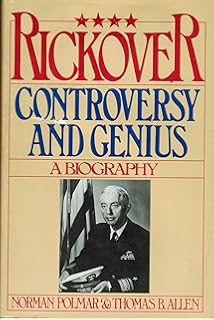
As the father of the nuclear powered Navy, Adm. Rickover was a pivotal figure in twentieth-century American history. While many books have been written about various aspects of his career, this is the first biography to have access to private papers, family and close friends. It not only deals with the admiral's controversial naval career but with phases of his personal life that made him what he was, including his youth as a Jewish immigrant who embraced America and the opportunities it offered. The author, Francis Duncan, worked with Rickover from 1969, when he was assigned to write a history of the nuclear propulsion program, until the admiral's death in 1986. Shortly before he died, Rickover turned over his files to Duncan, including letters to his first wife that give a vivid picture of the Navy from 1929 to 1945.
Rickover's second wife allowed Duncan access to letters covering important events later in his career. The author was also granted interviews with the admiral's son and sister and with individuals from the Naval Reactors, an organization headed by Rickover whose members mostly had refused to talk to other biographers. A witness to the admiral's daily activities and the programs he directed, Duncan also drew on his own considerable knowledge to present a portrait of the man that gives new insights into Rickover's genius and short-comings. The book does not go into technical detail but focuses on the admiral's fights to build and extend the nuclear fleet and the often-difficult relationships that developed in the pursuit of the goal. He shows that Rickover's efforts had a profound effect on the postwar world, that the excellence and responsibility he demanded arequalities that reach beyond the Navy, and that his influence continues to be felt today.
The use of low level laser to reduce pain, inflammation and edema, to promote wound, deeper tissues and nerves healing, and to prevent tissue damage has been known for almost forty years since the invention of lasers. This review will cover some of the proposed cellular mechanisms responsible for the effect of visible light on mammalian cells, including cytochrome c oxidase (with absorption peaks in the Near Infrared (NIR)).
Mitochondria are thought to be a likely site for the initial effects of light, leading to increased ATP production, modulation of reactive oxygen species, and induction of transcription factors. These effects in turn lead to increased cell proliferation and migration (particularly by fibroblasts). Verilog Code For Serial Adder Circuit more. Introduction Lasers (Light amplification by stimulated emission of radiation) are devices that typically generate electromagnetic radiation which are relatively uniform in wavelength, phase, and polarization, originally described by Theodore Maiman in 1960 in the form of a ruby laser. Laser is described as a source of light or radiation energy. Low Level Laser (LLL) is a special type of laser that effects on biologic systems through non-thermal means. This area of investigation started with the work of Mester et al in 1967. They reported non-thermal effects of lasers on mouse hair growth.
According to Posten et al, properties of low level lasers are: •. D) Intensity of 0.01-10 W/cm 2 and dose of 0.01 to 100 J/ cm 2. Most common methods of administration of LLL radiation include lasers such as ruby (694 nm), Ar (488 and 514 nm), He-Ne (632.8 nm), Krypton (521, 530, 568, and 647 nm), Ga-Al-As (805 or 650 nm), and Ga-As (904 nm). Low Level Laser therapy (LLLT) is the application of light to a biologic system to promote tissue regeneration, reduce inflammation and relieve pain.
Unlike other medical laser procedures, LLLT does not have an ablative or thermal mechanism, but rather a photochemical effect which means the light is absorbed and cause a chemical change. The reason why the technique is termed low level is that the optimum levels of energy density delivered are low and it is not comparable to other forms of laser therapy as practiced for ablation, cutting, and thermal tissue coagulation. The first law of photobiology explains that for a low power visible light to have any effect on a living biological system, the photons must be absorbed by electronic absorption bands belonging to some molecular photo-acceptors, which are called chromophores. The effective tissue penetration of light at 650 nm to 1200 nm is maximized. The absorption and scattering of light in tissue are both much higher in the blue region of the spectrum than the red, because the main tissue chromophores (hemoglobin and melanin) have high absorption bands at shorter wavelengths and tissue scattering of light is higher at shorter wavelengths. Water strongly absorbs infrared light at wavelengths greater than 1100 nm.
Therefore, the use of LLLT in animals and patients almost exclusively utilizes red and near-infrared light (600-1100 nm). Mitochondrial Respiration and ATP Current research about the mechanism of LLLT involves mitochondria. Cytochrome c oxidase (Cox) is a multicomponent membrane protein that contains a binuclear copper center (CuA) along with a heme binuclear center (a3-CuB), both of which facilitate the transfer of electrons from water soluble cytochrome c oxidase to oxygen. It is a terminal enzyme of the electron transport chain and plays a vital role in the bioenergetics of a cell. It was proposed that Cox is the primary photoacceptor for the red-NIR range in mammalian cells because absorption spectra obtained for Cox in different oxidation states was found to be very similar to the action spectra for biological responses to light. The absorption of photons by Cox leads to electronically excited states, and consequently can lead to quickening of electron transfer reactions. More electron transport necessarily causes increased production of ATP.
The light induced increase in ATP synthesis and increased proton gradient lead to an increasing activity of the Na+/H+ and Ca2+/Na+ antiporters, and of all the ATP driven carriers for ions, such as Na+/K+ ATPase and Ca2+ pumps. ATP is the substrate for adenylcyclase, and therefore the ATP level controls the level of cAMP. Both Ca2+and cAMP are very important second messengers. Ca2+ regulates almost every process in the human body (muscle contraction, blood coagulation, signal transfer in nerves, gene expression, etc). Myst 3 Exile Download Free Pc. Therefore the photoactivation of terminal enzymes, like Cox, plays a vital role in the activation of the diverse biological cascade observed subsequently to laser irradiation. Nitric Oxide and LLLT The activity of cytochrome c oxidase is inhibited by nitric oxide (NO),.
This inhibition can be explained by a direct competition between NO and O2 for the reduced binuclear center CuB/a3 of cytochrome c oxidase, and is reversible. It was proposed that laser irradiation could reverse this inhibition by photodissociating NO from its binding sites,. Because this coordinate binding is much weaker than a covalent bond, this dissociation is possible by LLL. The dissociation of NO from Cox increases the respiration rate. Light can indeed reverse the inhibition caused by NO binding to cytochrome oxidase, both in isolated mitochondria and in whole cells. LLL can also protect cells against NO-induced cell death.
Reactive Oxygen Species (ROS) and Gene Transcription LLLT was reported to produce a shift in overall cell redox potential in the direction of greater oxidation and increased ROS generation and cell redox activity have been reported,. It has been proposed that the redox state of a cell regulates cellular signaling pathways that control gene expression. Modulation of the cellular redox state can activate or inhibit signaling pathways.
Several regulation pathways are mediated through the cellular redox state. Changes in redox state induce the activation of numerous intracellular signaling pathways, such as nucleic acid synthesis, protein synthesis, enzyme activation and cell cycle progression. These cytosolic responses may induce transcriptional changes. Several transcription factors have been recognized to regulate by changes in cellular redox state. Among them redox factor-1 (Ref-1)-dependent activator protein-1 (AP-1) (Fos and Jun), nuclear factor B (NF-B), p53, activating transcription factor/cAMP-response element-binding protein (ATF/ CREB), hypoxia-inducible factor (HIF)-1 and HIF-like factor are the most important factors. Based on the ability of LLLT to modulate cellular metabolism and alter the transcription factors responsible for gene expression, it has been found to alter gene expression. LLL & Gene Expression The gene expression profiles of human fibroblasts irradiated by low-intensity red light show that the irradiation can affect the expression of many genes that belong to different function categories.
Irradiation of LLL stimulates cell growth directly through regulation of the expression of genes related to cell proliferation and indirectly through regulation of the expression of genes related to cell migration and remodeling, DNA synthesis and repair, ion channel and membrane potential, and cell metabolism. Irradiation by red light also enhances cell proliferation by suppression of cell apoptosis. Shows some of these genes. The Usage of LLLT The temporomandibular disorders (TMDs) have been identified as the most important cause of pain in the facial region. Low Level laser therapy (LLLT) has demonstrated to have analgesic, anti-inflammatory and biostimulating effects. The LLLT is a noninvasive, quick and safe, non-pharmaceutical intervention that may be beneficial for patients with TMDs. Another study proposed a novel combination of neural regeneration techniques for the repair of damaged peripheral nerves.
A biodegradable nerve conduit containing genipin-cross-linked gelatin was annexed using beta-tricalcium phosphate (TCP) ceramic particles (genipin-gelatin-TCP, GGT) to bridge the transection of a 15mm sciatic nerve in rats. Electrophysiological measurements (peak amplitude and area) illustrated by compound muscle action potential (CMAP) curves demonstrated that laser stimulation significantly improved nerve function and reduced muscular atrophy. Histomorphometric assessments revealed that laser stimulation accelerated nerve regeneration over a larger area of neural tissue, resulting in axons of greater diameter and myelin sheaths of greater thickness than that observed in rats treated with nerve conduits alone. Summary The molecular and cellular mechanisms of LLLT suggest that photons are absorbed by the mitochondria.
They stimulate more ATP production and low levels of ROS, which then activates transcription factors, such as NF-κB, to induce many gene transcript products responsible for the beneficial effects of LLLT. ROS are well known to stimulate cellular proliferation of low levels, but inhibit proliferation and kill cells at high levels. Nitric oxide is also involved in LLLT, and may be photo-released from its binding sites in the respiratory chain and elsewhere. It is possible that NO release in low amounts by low dose light may be beneficial. Further advances in the mechanistic understanding of LLLT will continue to be made in the near future. These advances will lead to greater acceptance of LLLT in main- stream medicine and may lead to LLLT being used for serious diseases such as stroke, heart attack and degenerative brain diseases.